Manuscript Felice: Gothic Sophistication for Modern Design
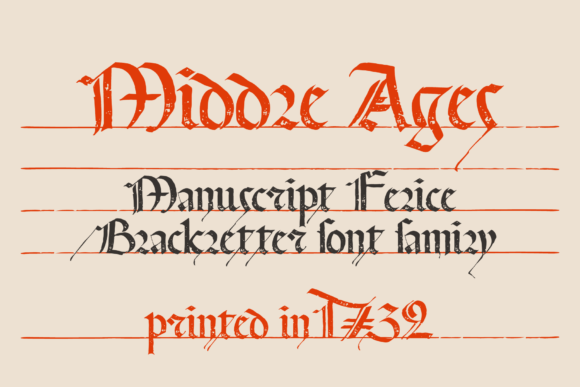
There's a particular weight to historical documents that digital typefaces often struggle to capture. It’s not just about old-looking letters; it's about the texture of time, the sense of a hand guiding a quill across vellum. This is the space Manuscript Felice occupies. Based on a vintage Italian Processional manuscript—its original book block now disintegrated, its author lost to history—this premium font carries an authentic, slightly weathered character. It’s not a sterile reproduction but a creative font with soul, offering designers a direct line to medieval elegance without the need for historical research.
The Anatomy of Old-World Charm
At its core, Manuscript Felice is a blackletter font, but its execution is nuanced. The letterforms feature the sharp angles and dense texture typical of Gothic scripts, yet they are softened by graceful, flowing curves. This combination prevents the text from feeling overly aggressive or difficult to read, which can be a pitfall of some blackletter styles. Think of it as a display font with the soul of a serif font; it has the presence for a headline but retains enough structure for short passages of text.
The personality of this typeface is one of understated sophistication. It doesn't shout for attention with novelty. Instead, it commands respect through its intricate details and historical resonance. For a brand identity, this font communicates tradition, craftsmanship, and a connection to the past. It’s ideal for businesses that want to convey heritage—think artisan bakeries, craft breweries, specialty bookshops, or bespoke tailoring services.
Strategic Applications: Where and How to Use It
Knowing a font's character is one thing; understanding its practical application is another. Manuscript Felice is a versatile design asset, but its strengths are best leveraged in specific contexts.
In Branding and Logo Design: This is where the font shines. Its unique letterforms create instant memorability. A logo set in Manuscript Felice becomes a mark of distinction. However, it’s crucial to test it at small sizes. The intricate details may become muddled in a tiny favicon, so consider pairing it with a clean sans serif font for secondary text.
For Editorial and Packaging Design: Imagine the chapter headings in a fantasy novel, the title of a gourmet chocolate bar, or the name of a boutique winery on its label. Manuscript Felice adds a layer of narrative and quality. In editorial design, use it for pull quotes or section titles to break up modern layouts with a historical accent.
Digital Presence and Social Media: While not a body text workhorse for websites, it’s powerful for web design headers, hero text, and call-to-action buttons where impact is needed. On social media graphics, it can stop the scroll for promotions, event announcements, or brand storytelling posts, especially for themes related to history, literature, or artisanal goods.
Pairing and Practical Considerations
The key to using a strong display font like this is balance. A good font pairing is essential. Counter its medieval weight with a contemporary, highly legible sans serif font like Helvetica Neue or a geometric sans for body copy. For a more cohesive traditional feel, pair it with a sturdy, old-style serif font like Garamond or Caslon. Avoid pairing it with other ornate script fonts or handwritten fonts, as this will create visual chaos.
Always test for readability. While suitable for short paragraphs, long-form text in Manuscript Felice can be taxing on the eyes. Its strength is in headlines, subheads, and logos. Review the full character set of the commercial font before purchasing; check for the availability of alternates, ligatures, and extended punctuation that can add polish to your work.
Finally, respect the licensing. Since Manuscript Felice is a premium font derived from a unique historical source, ensure its license covers your intended use—whether for a client's logo design, product packaging design, or a commercial website. Investing in the proper license supports the typographers who preserve and digitize these pieces of history, allowing you to bring a touch of that timeless, Gothic sophistication to your next project.